

What to Do When a Building's Fire Safety Certification Has Lapsed
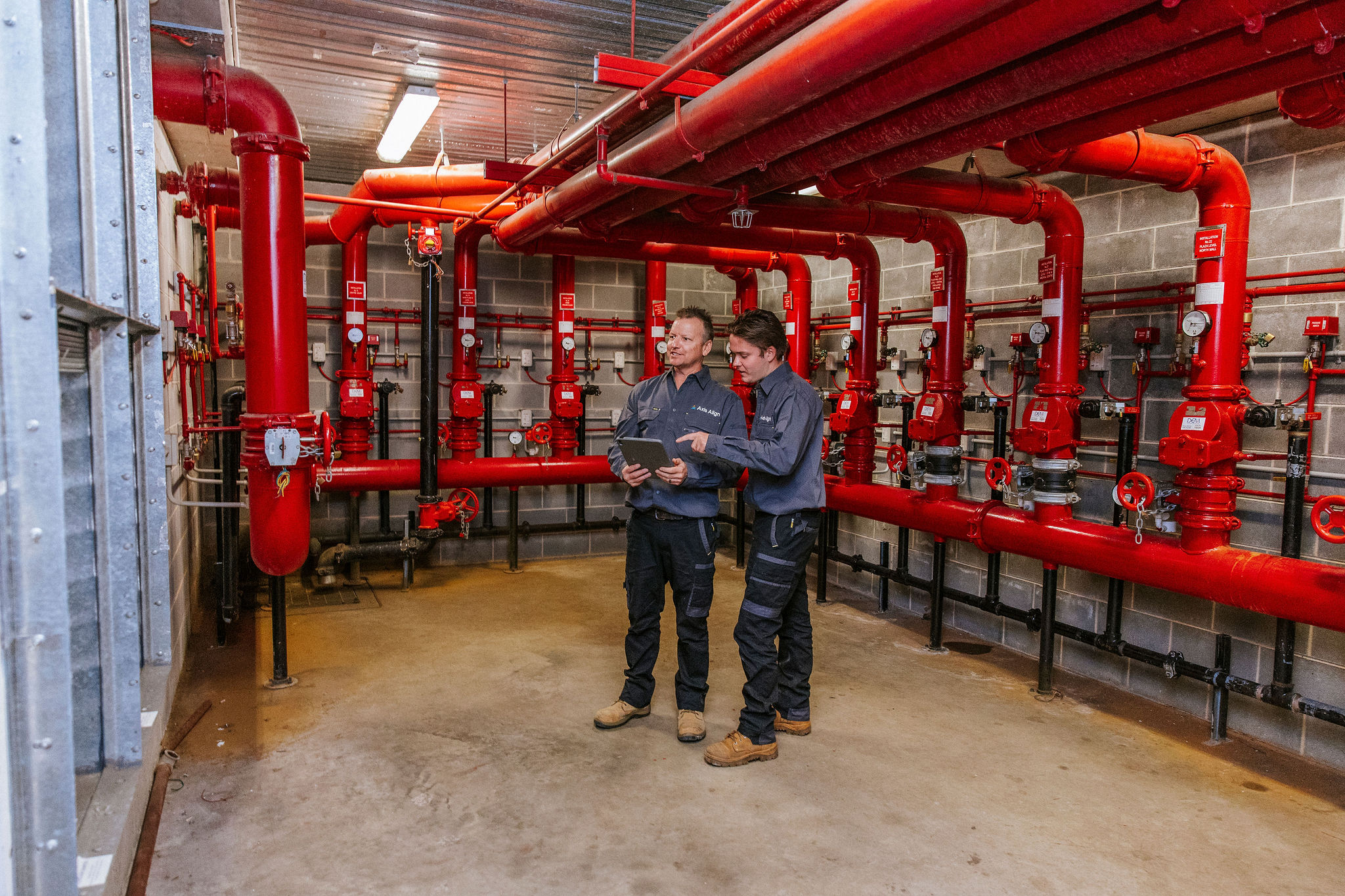
An Annual Fire Safety Statement (AFSS) isn't a one-time box to tick. It's a legal requirement that needs to be renewed every year, and it's surprisingly easy for it to lapse, particularly when responsibility for a building changes hands, when property management arrangements shift, or when it simply falls through the cracks of a busy facilities calendar.
If you've discovered your building's AFSS has lapsed, or was never lodged in the first place, it's more common than you might think, and usually solvable. The key is understanding what the process involves so you can move from discovery to resolution without unnecessary delay or cost.
What an Annual Fire Safety Statement Actually Covers
An AFSS is a statement issued by the building owner confirming that each essential fire safety measure in the building has been assessed by an Accredited Practitioner (Fire Safety) and is capable of performing to the required standard. On the mechanical side, this includes fire and smoke dampers, stairwell pressurisation systems, and car park or basement exhaust systems, which are designed to keep escape routes clear and support firefighting operations in the event of a fire.
It's a council-enforced legal obligation, not an optional best-practice item, and it sits alongside other essential fire safety measures, such as fire doors, sprinkler systems, and emergency lighting, each of which requires its own assessment and sign-off as part of the overall statement. In NSW, the obligation sits under the Environmental Planning and Assessment (Development Certification and Fire Safety) Regulation 2021, and the statement must be given to both the local council and Fire and Rescue NSW each year.
What Happens If It's Lapsed or Never Been Done
The first step is always an assessment. We go in and establish exactly what's installed, how it's currently performing, and how far it sits from the required standard. This isn't a guessing exercise; it's a genuine technical inspection that identifies what's working, what isn't, and what documentation, if any, already exists.
From there, we put together a plan to close any gaps, whether that's straightforward remedial work like recalibrating sensors carpark sensors or replacing a faulty component, or something more involved that requires engineering input. When testing shows a system isn't operating as its documentation says it should, we flag and address it as part of the same process, rather than leaving it for a future inspection to catch.
Not Every Shortfall Needs Expensive Rectification
Non-compliance isn't always black and white. A clearance or measurement that sits marginally outside the exact written standard doesn't automatically mean costly structural rectification is the only path forward, even though that's often the assumption building owners make when they first hear the word “non-compliant.”
In many cases, a performance solution, developed by a qualified fire engineer and approved through the appropriate certification process, can achieve compliance without the disproportionate cost of a full rebuild or major structural works. This distinction matters because the cost difference between full rectification and a properly engineered performance solution can be substantial, particularly for a larger building with multiple minor issues. We've written more about how that performance solution process actually works if you'd like to understand it in more detail.
Why It's Worth Acting Early
Leaving a lapsed AFSS unresolved carries real risk: council enforcement action, including penalty notices, insurance complications if a claim is ever made on a building that wasn't properly certified, and in the worst case, a genuine life-safety risk if fire safety measures aren't functioning correctly when they're actually needed.
Acting on it early, before it becomes an issue flagged by council or an insurer, is generally the lower-cost, lower-stress path. Building owners who wait until they're forced to act, whether through a council notice or an insurance review, generally have far less flexibility in how and when the work gets done, and often end up paying a premium for urgency that could have been avoided.
How We Approach It
We start every engagement like this with an honest, thorough assessment, so you know exactly where you stand before any work begins or any money is committed. Neither of us benefits from recommending work that isn't genuinely needed, and every recommendation we make is grounded in what the assessment finds.
From there we build a clear, practical plan to get you back into compliance, and where relevant, we work alongside qualified fire engineers to find the most sensible, cost-effective path forward. If your building's fire safety certification has lapsed, or you're not entirely sure where it stands, talk to the team, and we'll help you understand what's involved before you commit to anything.
Talk to the team about your Mechanical Fire Safety needs.

When a Building Doesn't Meet the Letter of a Standard
If you've been told part of your building doesn't meet the exact wording of a fire safety standard, it's easy to assume the only fix is expensive structural rectification. For many building owners, that's the first and only option they're offered, and it's often the moment a straightforward compliance issue turns into a costly, stressful project.
That isn't always the case. The National Construction Code (NCC) allows for what's called a performance solution. Instead of meeting the written figure exactly, you show that an alternative still achieves the safety outcome the Code aims for, and the approach is then assessed and approved. Building owners are sometimes wary, but it's a recognised part of how compliance works in Australia.
Why Standards Aren't Always a Perfect Fit for Every Building
Australian Standards set precise requirements: a clearance distance, a fire rating duration, a specific configuration for a particular type of system. These figures are written to apply broadly, across an enormous range of building types, ages and layouts, which means they can't account for every possible real-world scenario.
In practice, existing or as-built buildings, particularly older ones or those with unusual layouts shaped by decades of renovations and changes of use, can fall just outside those exact figures in ways that don't necessarily affect safety. Requiring full rectification for every minor variance would be disproportionately costly for many building owners, and the building may still be safe and compliant.
What a Performance Solution Actually Is
A performance solution is an alternative approach, developed by a qualified fire safety engineer, that demonstrates a level of safety at least equivalent to strict compliance with the written requirements. Rather than treating every deviation as a hard fail, the fire engineer looks at what the standard is actually trying to achieve, the underlying safety outcome, and assesses whether the alternative delivers that outcome just as effectively, even if it doesn't match the standard word for word.
This might involve additional testing, modelling or documentation to demonstrate the equivalent outcome, and the process is rigorous. It isn't a matter of simply asking for an exception. It's a formal engineering assessment that has to stand up to independent review before it's approved.
Who's Involved and Who Makes the Final Call
A mechanical contractor can't determine this alone, and it shouldn't. In NSW, an accredited fire safety engineer develops a performance solution for fire safety; Fire and Rescue NSW is consulted on the design brief and assesses the final performance solution report, and the certifier must have that report before approving the work. That independent, multi-party review is what gives the outcome its credibility.
Our role, as part of our mechanical fire safety work, is to identify where this pathway may apply, gather the technical evidence needed to support the case, and work directly with a fire engineer to progress it through to an approved outcome. We're not the ones making the final compliance call; we're the ones making sure the right information gets in front of the people who do.
Why This Approach Protects Building Owners
This isn't about avoiding compliance. It's about avoiding disproportionate costs for issues that don't materially affect safety, while still achieving an approved, documented result you can rely on if it's ever questioned down the track.
For a building owner facing a rectification quote that feels out of step with the actual issue, such as major works to correct something that sits only marginally outside the written standard, it's worth asking whether a performance solution could be the more sensible path. In many cases it is, and pursuing it properly can deliver substantial savings without compromising on safety.
How We Approach It
We look at every compliance issue on its merits. Where a performance solution makes sense, we'll say so, and work with the right fire engineer to see it through the approval process properly. We won't recommend a costly rectification path where a legitimate, less disruptive alternative exists, and equally, we won't suggest a performance solution where the safety case doesn't support it.
If you've received a compliance recommendation that feels disproportionate to the issue at hand, talk to the team before committing to expensive rectification work. It costs nothing to have the conversation, and it may save you far more than that.
Talk to the team about your Mechanical Fire Safety needs.

Why Seismic Restraints Are Now Being Enforced on Commercial HVAC Installations
If you're planning a commercial HVAC upgrade or fit-out, you may have noticed a new item appearing in project requirements: seismic restraint. It isn't a new standard, but it's being enforced far more consistently than it used to be, and it's catching many building owners and project teams off guard partway through design or construction.
Seismic restraint for mechanical plant and ductwork falls under AS 1170.4, the Australian Standard for structural design actions relating to earthquakes, and the National Construction Code (NCC) references it directly. In recent years, we've seen a clear shift toward projects being asked to demonstrate seismic compliance where it previously wasn't scrutinised, including many standard commercial fit-outs that wouldn't have attracted this level of engineering attention.
What Seismic Restraint Actually Means for HVAC and Mechanical Plant
In practical terms, seismic restraint means suspended ductwork, indoor units, condensers and other mechanical plant need to be braced so they don't fail, shift or fall during ground movement. This isn't just about the equipment staying operational; it's about preventing a piece of plant from becoming a falling hazard to people below, or damaging other building services on its way down.
This requirement applies to buildings assessed at Importance Level 2, 3 or 4 under AS 1170.0 and the NCC, which covers the vast majority of commercial buildings, not just hospitals, data centres or other critical infrastructure. A standard office building, retail tenancy or industrial facility can sit well within scope, which is part of why so many project teams are encountering this requirement for the first time.
Why This Is Being Enforced More Now
Seismic restraint requirements for non-structural building services have technically existed in the standards for a long time. What's changed is enforcement. Certifiers, engineers, and project teams increasingly ask for evidence of seismic compliance as a standard part of sign-off, whereas in the past it received far less scrutiny.
The 2024 edition of AS 1170.4, the first full revision since 2007, also introduced more detailed requirements for building services, including minimum clearances between parts and components and a special study for Importance Level 4 buildings. In practice, this means more genuine engineering assessment on a project-by-project basis, which is part of why the requirement is being felt more sharply now than it was even a few years ago.
Why It Applies Even in Lower Seismic-Risk Areas Like NSW
A common assumption is that seismic bracing matters only in higher seismic-risk regions, and that a region like NSW, which isn't considered a high-risk earthquake zone, shouldn't need to worry about it. That assumption doesn't hold up against the actual requirement.
AS 1170.4 applies a minimum level of earthquake design across the whole country. A building's location, soil conditions, height and Importance Level together determine what's required, so a lower-risk region like NSW may mean lower design forces, but it doesn't remove the obligation. In other words, this is a compliance obligation that applies regardless of regional earthquake risk, not a judgement call. A building owner or project manager who assumes seismic bracing “doesn't apply” is working from an outdated understanding of how the standard operates.
What This Means If You're Planning a Commercial HVAC Project
The practical takeaway is that seismic bracing needs to be considered early, at the design stage, rather than added as an afterthought once a project is already under construction. Retrofitting seismic compliance into a partially completed installation is typically more expensive and disruptive than designing for it from the outset.
It can also interact directly with other compliance requirements in ways that aren't always obvious upfront. For example, where a ceiling or structure is fire-rated, standard metal fixings that penetrate the fire-rated structure may not be acceptable, so an alternative bracket or mounting method must be engineered to satisfy both fire and seismic requirements. We come across this on fit-outs with fire-rated ceilings. Discovering this tension partway through a project, after a design has already been approved and construction is underway, can mean a costly and time-consuming redesign under pressure.
How We Approach It
We build seismic compliance into the design conversation early, rather than waiting for it to be flagged during sign-off. Where a project has competing requirements, such as a fire-rated structure that limits fixing methods, we work through the engineering with the right specialists, including seismic and structural engineers where needed, so the solution is designed to meet both the fire and seismic requirements, not just the one that's easiest to solve for.
If you're planning a commercial HVAC project and want to understand what seismic compliance means for your building before it becomes a problem at sign-off, talk to the team early. It's much easier to have this conversation at the design stage than midway through construction.
Talk to the team about seismic compliance for your next HVAC project.
Fire Damper Compliance
The 5-Year Testing Cycle and the Paper Trail You Need
If you manage a commercial building, you've probably been told your fire dampers need regular testing, but it's not always clear how often, what's involved in a test, or why the documentation matters.
Fire dampers are tested on a staged compliance cycle, generally over a five-year rolling schedule, and the paper trail proving that testing has happened is just as critical as the physical inspection itself. Understanding how this cycle works can save building owners confusion and unnecessary back-and-forth with contractors and auditors down the track.
Why Fire Dampers Matter in the First Place
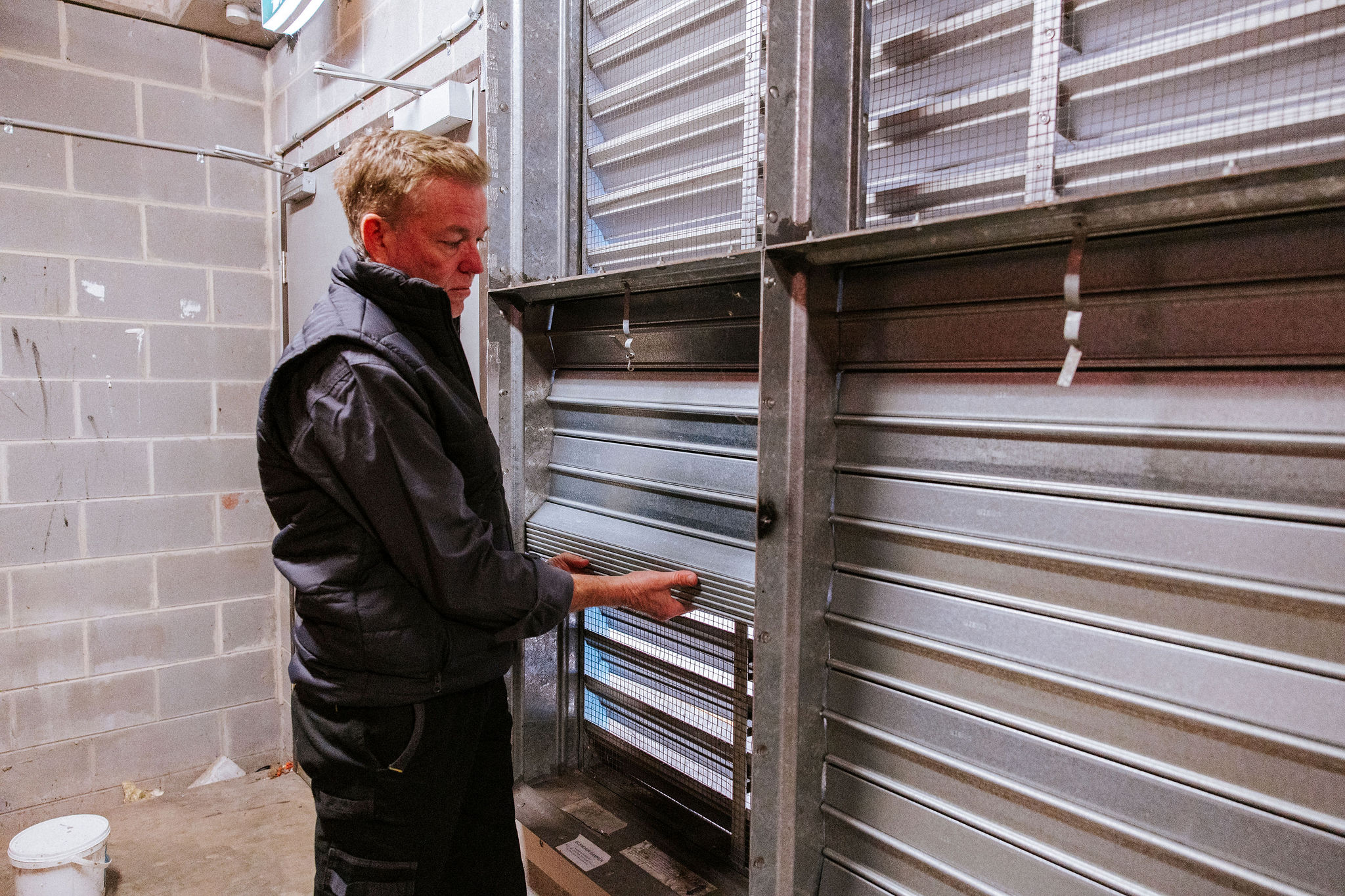
Fire dampers are installed within ductwork specifically to stop the spread of fire (and smoke if a combined fire smoke damper is installed) between different fire-compartmentalised areas of a building. When a fire is detected, they're designed to close automatically, containing the fire to one area and protecting the penetrations from being a point where fire can spread through the building to an adjoining compartment
Because they're a passive, mostly hidden part of a building's fire safety system, sitting inside ductwork above ceilings and behind walls, it's easy to overlook them entirely until an audit or inspection brings them to attention. That's precisely why a structured, documented testing regime matters so much; these are systems you generally can't see working, or failing, without deliberately checking.
The Testing Cycle Explained
In a building with many dampers, testing isn't usually done all at once. Instead, it's staged, with a portion tested each year on a rolling cycle, so that every damper in the building is checked within the required compliance window, generally five years.
Spreading the testing out keeps the cost and workload manageable, and every damper still gets checked. Think of a large commercial building with hundreds of dampers. Getting to all of them in one year would mean a lot of ceiling access and disruption for tenants, so it makes more sense to work through a set number each year.
Why the Documentation Matters as Much as the Test
If a building were ever involved in a fire, being able to prove that every damper has been tested, and exactly when, is a critical part of demonstrating compliance, both to insurers and to any subsequent investigation. A verbal assurance that “it's been done” isn't enough, and it won't hold up under scrutiny.
Building owners should expect a genuine, retrievable record for every damper: dates tested, results recorded, and a clear log showing which dampers were tested when, going back through the full cycle. This documentation should be something you can produce on request, not something you have to chase down or reconstruct after the fact.
What Can Change Between Tests
Conditions around a damper can change even when the damper itself hasn't failed or degraded. A new pipe, cable tray or fixture installed nearby during unrelated building works, for example, can affect the clearance a damper needs to operate correctly, creating a genuine compliance issue that didn't exist at the time of the last inspection.
Part of the value of a scheduled, professionally managed testing programme is catching these changes early, before they become a bigger problem or, worse, before they're only discovered during an audit triggered by something going wrong. A damper that passed its last test can still become non-compliant in the years between visits, purely because of changes elsewhere in the building.
What to Ask Your Contractor For
When you engage a contractor for damper testing, ask for more than a completion confirmation or a single invoice. You should receive dated records for each damper tested, clear pass-or-fail results, and visibility into exactly where your building sits within its five-year testing cycle.
If a contractor can't readily produce this level of documentation, or treats it as an afterthought rather than a core part of the service, treat that as a warning sign. The documentation isn't paperwork for its own sake; it's the evidence that protects you if compliance is ever questioned.
How We Approach It
We manage damper testing as a structured, documented programme, not a one-off job, so you always know where your building stands within its testing cycle and have the paper trail to prove it, whenever it's needed.
If you're not confident your building's damper testing is genuinely up to date, or you've never actually seen the documentation behind it, get in touch, and we'll take a look. It's a straightforward thing to check, and far better to confirm now than to discover a gap during an audit or, worse, after an incident.